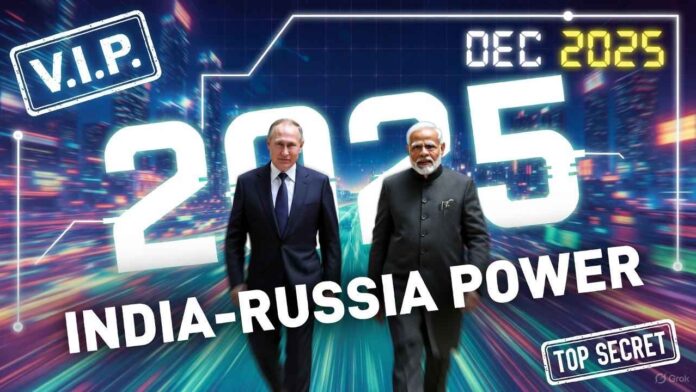
What does Putin India visit 2025 mean for India Russia relations? Explore the geopolitics, foreign policy, and international relations implications.
Table of Contents
The highly anticipated Putin India visit 2025 is already generating significant buzz within international relations circles. This meeting has the potential to reshape India Russia relations and alter the broader geopolitical landscape. The visit is expected to cover a wide range of topics, from defense cooperation and energy partnerships to trade and investment. What impact will this summit have on the global stage?
Understanding India Russia Relations: A Historical Perspective
India Russia relations have deep historical roots, dating back to the Soviet era. During the Cold War, the Soviet Union was a steadfast ally of India, providing crucial economic and military assistance. This partnership was instrumental in India’s industrial development and defense capabilities. After the collapse of the Soviet Union, the relationship transitioned to a new footing, but the strategic partnership remained strong. Today, India and Russia share common interests in areas such as counter-terrorism, energy security, and a multi-polar world order. The relationship is underpinned by mutual trust, respect, and a shared vision for a stable and prosperous Asia. Understanding this deep-seated and resilient India Russia relations foundation is key to understanding the potential impact of the Putin India visit 2025.
- Historical Ties: Soviet support during the Cold War.
- Strategic Partnership: Continued cooperation post-Soviet era.
- Shared Interests: Counter-terrorism, energy, and a multi-polar world.
https://bharatdiaries.com/guru-nanak-dev-ji-the-founder-of-sikhism/
Key Issues on the Agenda for the Putin India Visit 2025
Several critical issues are expected to be on the agenda during the Putin India visit 2025. These include:
- Defense Cooperation: Russia remains a major supplier of military equipment to India. Discussions are likely to focus on ongoing defense projects, such as the S-400 missile defense system, and potential new deals, including a full license for the SU-57 fighter jet.
- Energy Security: India is a major energy consumer, and Russia is a key supplier of oil and gas. The two countries are exploring opportunities to expand cooperation in the energy sector, including investments in oil and gas fields and the development of nuclear power plants.
- Trade and Investment: Bilateral trade between India and Russia has been growing steadily, but there is significant potential for further expansion. The two countries are working to reduce trade barriers and promote investment in key sectors, such as infrastructure, technology, and agriculture.
- Regional Security: India and Russia share concerns about terrorism, extremism, and instability in the region. They are likely to discuss ways to enhance cooperation on counter-terrorism and promote regional security.
- International Relations: Both countries advocate for a multi-polar world order and are committed to strengthening international cooperation through multilateral forums such as the United Nations and the Shanghai Cooperation Organisation (SCO).
The Geopolitics of the Putin India Visit 2025: A Shifting World Order
The Putin India visit 2025 takes place against the backdrop of a shifting global order. The rise of China, the increasing assertiveness of Russia, and the growing multipolarity of the international system are all factors shaping the context of this important meeting. India and Russia share a common interest in promoting a more balanced and equitable world order, one that is not dominated by any single power. This shared vision provides a strong foundation for their strategic partnership. How does this event play into the complex web of geopolitics?
- Multipolarity: Shared vision of a world not dominated by a single power.
- China’s Rise: Common interests in balancing China’s influence.
- Regional Stability: Cooperation in addressing regional security challenges.
Defense Deals and the SU-57: A Game Changer for India’s Air Force?
A significant aspect of the Putin India visit 2025 will undoubtedly revolve around defense cooperation, particularly the potential acquisition of the SU-57 fighter jet. The SU-57 is a fifth-generation fighter aircraft developed by Russia, boasting advanced stealth capabilities, supersonic cruise speed, and cutting-edge avionics. Securing a full license for the SU-57 would be a major boost for India’s air force, enhancing its technological edge and operational capabilities. This deal would not only strengthen India’s defense posture but also deepen strategic India Russia relations.
- SU-57 Capabilities: Stealth, supersonic cruise, advanced avionics.
- Technology Transfer: Full license would boost India’s aerospace industry.
- Strategic Implications: Strengthened defense and enhanced India Russia relations.
S-500 Missile Defense System: Enhancing India’s Security
Another key component of the defense cooperation between India and Russia is the S-500 missile defense system. The S-500 is the latest generation of Russian air defense systems, capable of intercepting a wide range of targets, including ballistic missiles, cruise missiles, and aircraft. The acquisition of the S-500 would significantly enhance India’s air defense capabilities and provide a crucial layer of protection against potential threats. This advanced system is a testament to the strong India Russia relations in the realm of defense.
- S-500 Capabilities: Intercepts ballistic missiles, cruise missiles, and aircraft.
- Enhanced Security: Provides a crucial layer of air defense.
- Strategic Partnership: Reinforces the strong defense ties between India and Russia.
Economic Cooperation: Expanding Trade and Investment
Beyond defense, the Putin India visit 2025 will also focus on strengthening economic cooperation between the two countries. Bilateral trade has been growing, but there is ample room for further expansion. Both countries are keen to explore opportunities in areas such as energy, infrastructure, technology, and agriculture. The establishment of a free trade agreement between India and the Eurasian Economic Union (EAEU), which Russia is a member of, could provide a significant boost to bilateral trade. Increased investment flows are also a priority, with both sides looking to attract investments in key sectors.
- Trade Expansion: Opportunities in energy, infrastructure, technology, and agriculture.
- Free Trade Agreement: Potential for a free trade agreement with the EAEU.
- Investment Flows: Attracting investments in key sectors.
Energy Security: A Cornerstone of India Russia Relations
Energy security is a vital aspect of India Russia relations. India is a major energy consumer, and Russia is a key supplier of oil, gas, and nuclear fuel. The two countries have a long history of cooperation in the energy sector, including joint ventures in oil and gas exploration and production. The Putin India visit 2025 is expected to further strengthen this cooperation, with discussions focusing on new projects and investments in the energy sector. The development of nuclear power plants in India with Russian assistance is also a key area of collaboration. This collaboration highlights the depth and breadth of India Russia relations.
- Oil and Gas: Joint ventures in exploration and production.
- Nuclear Power: Development of nuclear power plants in India.
- Long-Term Cooperation: Strengthening energy security through long-term partnerships.
Regional Security: Addressing Common Threats
India and Russia share common concerns about regional security, including terrorism, extremism, and instability in Afghanistan and Central Asia. The two countries have been working together to address these challenges through intelligence sharing, joint military exercises, and diplomatic engagement. The Putin India visit 2025 provides an opportunity to further strengthen cooperation on regional security and to coordinate efforts to promote stability and peace in the region. This collaboration is critical for maintaining peace in the face of evolving geopolitical threats.
- Terrorism and Extremism: Joint efforts to counter terrorism and extremism.
- Afghanistan and Central Asia: Promoting stability in the region.
- Intelligence Sharing: Enhancing cooperation through intelligence sharing.
The Impact on Foreign Policy: A Strategic Alignment?
The Putin India visit 2025 has significant implications for the foreign policy of both countries. India and Russia share a common vision for a multi-polar world order and are committed to strengthening international cooperation through multilateral forums. This strategic alignment provides a foundation for closer cooperation on a range of global issues, including climate change, sustainable development, and nuclear disarmament. The visit also underscores the importance of maintaining strong and independent foreign policy approaches, free from external pressure.
- Multipolar World Order: Shared vision for a more balanced international system.
- Global Issues: Cooperation on climate change, sustainable development, and nuclear disarmament.
- Independent Foreign Policy: Maintaining strong and independent foreign policy approaches.
International Relations and the Global Stage
The broader context of international relations is crucial to understanding the significance of the Putin India visit 2025. In an increasingly complex and uncertain world, strong bilateral partnerships are essential for promoting stability and addressing global challenges. India and Russia are both major players on the global stage, and their cooperation can have a significant impact on international affairs. The visit provides an opportunity to reaffirm their commitment to multilateralism and to work together to strengthen the international rules-based order. The evolving landscape of international relations makes this meeting all the more pertinent.
- Multilateralism: Commitment to strengthening international cooperation.
- Global Challenges: Addressing issues such as climate change and terrorism.
- International Rules-Based Order: Working to uphold the international rules-based order.
Potential Challenges and Obstacles
Despite the strong foundation of India Russia relations, there are also potential challenges and obstacles that need to be addressed. These include:
- Differing Perspectives on China: While both countries share concerns about the rise of China, they may have differing perspectives on how to manage this challenge. India is wary of China’s growing assertiveness in the Indo-Pacific region, while Russia has been strengthening its ties with China in recent years.
- U.S. Sanctions: U.S. sanctions on Russia could potentially complicate India’s defense and energy cooperation with Russia. India has been seeking waivers from these sanctions, but the issue remains a source of concern.
- Bureaucratic Hurdles: Bureaucratic hurdles and delays can sometimes hinder the implementation of joint projects and initiatives. Both countries need to streamline their bureaucratic processes to ensure that projects are completed on time and within budget.
The Role of Personal Diplomacy
Personal diplomacy plays a crucial role in fostering strong relationships between leaders and countries. The personal rapport between Putin and Modi is widely regarded as a key factor in the success of India Russia relations. Their frequent meetings and personal interactions have helped to build trust and understanding, which is essential for navigating complex issues and overcoming potential challenges. The Putin India visit 2025 will provide another opportunity for the two leaders to strengthen their personal bond and to reaffirm their commitment to the strategic partnership.
- Personal Rapport: The strong personal relationship between Putin and Modi.
- Trust and Understanding: Building trust and understanding through personal interactions.
- Navigating Challenges: Using personal diplomacy to overcome potential challenges.
Future Prospects for India Russia Relations
The future prospects for India Russia relations are bright. Both countries are committed to strengthening their strategic partnership and to expanding cooperation in a wide range of areas. The Putin India visit 2025 is expected to set the stage for even closer collaboration in the years to come. The long-term trajectory of the relationship is positive, driven by shared interests, mutual trust, and a commitment to a multi-polar world order.
- Strategic Partnership: Commitment to strengthening the strategic partnership.
- Expanding Cooperation: Opportunities for growth in various sectors.
- Positive Trajectory: The long-term outlook for India Russia relations is positive.
The Impact on Foreign policy of other Countries
The Putin India visit 2025 does not only affect India Russia relations. The countries in the surrounding regions of India such as Pakistan are also going to be affected by this decision, with some countries either having to increase military spending to catch up with the new equipment, or choose a side. In short, it is an important decision.
The Significance of Timing
The timing of the Putin India visit 2025 is significant. The global landscape is in a state of flux, with new challenges and opportunities emerging. The visit takes place against the backdrop of ongoing geopolitical tensions, economic uncertainties, and evolving security threats. In this context, the strengthening of India Russia relations sends a strong signal of stability and cooperation to the world. It also demonstrates the resilience of the partnership in the face of external pressures.
- Geopolitical Tensions: Strengthening ties amidst global tensions.
- Economic Uncertainties: Promoting economic cooperation in uncertain times.
- Security Threats: Addressing evolving security threats through joint efforts.
Conclusion: A Geopolitical Milestone?
The Putin India visit 2025 represents a significant milestone in India Russia relations. The visit is expected to further strengthen the strategic partnership between the two countries and to expand cooperation in a wide range of areas, from defense and energy to trade and regional security. While challenges and obstacles remain, the long-term trajectory of the relationship is positive, driven by shared interests, mutual trust, and a commitment to a multi-polar world order. The outcome of this visit will have far-reaching implications for the geopolitics of the region and the broader international landscape. The event underscores the enduring importance of strong bilateral partnerships in an increasingly complex and uncertain world and further enhances India Russia relations. As such, the Putin India visit 2025 is likely to be remembered as a pivotal moment in the evolution of India’s foreign policy and its engagement with the world. The impact of the Putin India visit 2025 will be watched closely by observers around the world, as it has the potential to reshape the geopolitical landscape and usher in a new era of cooperation and partnership between two of the world’s most important countries. The discussion surrounding the event highlights key aspects of foreign policy and international relations.
- Strategic Partnership Strengthened: Reinforcing the strategic partnership.
- Expanded Cooperation: Growth in various sectors of cooperation.
- Geopolitical Implications: Far-reaching implications for the region and the world.
The Impact on India’s Foreign Policy
The Putin India visit 2025 is poised to significantly influence India’s foreign policy trajectory. By solidifying the strategic partnership with Russia, India aims to maintain its autonomy in international affairs and pursue its national interests without undue external pressure. This collaboration aligns with India’s long-standing policy of non-alignment, allowing it to engage with various global powers on its own terms. The strengthened ties with Russia also provide India with a reliable partner in addressing regional security challenges and promoting stability in the Indo-Pacific region. The success of the Putin India visit 2025 could pave the way for closer cooperation on a range of global issues, further enhancing India’s role as a key player in international diplomacy.
- Strategic Autonomy: Preserving India’s independence in foreign policy.
- Regional Security: Enhancing India’s ability to address security challenges.
- Global Influence: Strengthening India’s role in international diplomacy.
Future Areas of Cooperation
Looking ahead, there are several promising areas for future cooperation between India and Russia:
- Arctic Cooperation: With the Arctic region becoming increasingly accessible due to climate change, India and Russia can collaborate on scientific research, resource exploration, and infrastructure development in the region.
- Space Exploration: India and Russia have a long history of cooperation in space exploration, and there is potential for further collaboration on joint missions to the Moon and other celestial bodies.
- Digital Economy: India and Russia can work together to promote the development of the digital economy, including cooperation in areas such as cybersecurity, artificial intelligence, and e-commerce.
- Healthcare: India and Russia can collaborate on healthcare initiatives, including the development of new drugs and vaccines, as well as the sharing of best practices in healthcare delivery.
Challenges in India Russia Relations
Despite the strong foundation and promising prospects of India Russia relations, several challenges need careful attention:
- Balancing Relations with Other Major Powers: India needs to carefully manage its relationships with other major powers, such as the United States and China, while maintaining its strategic partnership with Russia.
- Economic Diversification: India needs to diversify its economy and reduce its dependence on Russia for defense equipment and energy supplies.
- Technological Advancement: India needs to invest in its own technological capabilities and reduce its reliance on Russian technology.
- Geopolitical Shifts: India needs to adapt to the evolving geopolitical landscape and ensure that its partnership with Russia remains relevant and effective.
The Role of Public Opinion
Public opinion plays a significant role in shaping India Russia relations. Both countries have a long history of mutual respect and admiration, and public support for the partnership remains strong. However, it is important to continue to engage with the public and to highlight the benefits of the relationship. Public diplomacy initiatives, cultural exchanges, and educational programs can help to strengthen people-to-people ties and to promote a better understanding of each other’s cultures and values.
- Mutual Respect: Strong public support for the partnership.
- Public Diplomacy: Engaging with the public to promote understanding.
- Cultural Exchanges: Strengthening people-to-people ties through cultural exchanges.
The Long-Term Vision
The long-term vision for India Russia relations is one of a strong, stable, and mutually beneficial partnership that contributes to peace, security, and prosperity in the region and the world. This vision is based on shared interests, mutual trust, and a commitment to a multi-polar world order. By working together, India and Russia can overcome the challenges and obstacles that lie ahead and build a brighter future for their people and for the world.
- Shared Interests: Building a partnership based on common goals.
- Mutual Trust: Fostering trust and understanding between the two countries.
- Multi-Polar World Order: Promoting a more balanced and equitable international system.
Putin India visit 2025: The Key Takeaways
The Putin India visit 2025 is expected to be a pivotal moment in India Russia relations, with far-reaching implications for geopolitics, foreign policy, and international relations. The visit provides an opportunity to strengthen the strategic partnership, expand cooperation in key sectors, and address common challenges. While challenges and obstacles remain, the long-term prospects for the relationship are bright, driven by shared interests, mutual trust, and a commitment to a multi-polar world order. The outcome of this visit will be closely watched by observers around the world, as it has the potential to reshape the geopolitical landscape and usher in a new era of cooperation and partnership between two of the world’s most important countries. The implications of the potential acquisitions such as the SU-57 fighter jet and the S-500 missile defense system are critical to understanding the significance of the event.
In conclusion, the Putin India visit 2025 is not just a bilateral event; it is a geopolitical signal with global implications. It underscores the enduring importance of strong partnerships in an increasingly complex and uncertain world and highlights the potential for India and Russia to work together to promote peace, stability, and prosperity in the region and beyond. The strengthening of India Russia relations, the deepening of defense cooperation, and the expansion of economic ties are all important developments that will shape the future of international relations. The focus on energy security, regional security, and global governance reflects the shared priorities of both countries and their commitment to addressing common challenges. The success of this visit will depend on the ability of both sides to overcome the challenges and obstacles that lie ahead and to build on the strong foundation of mutual trust and understanding that has characterized India Russia relations for decades.
The potential for the Putin India visit 2025 to reshape the geopolitical landscape makes it a critical event to watch. This will shape the future of India Russia relations and determine their place in the evolving world order.

