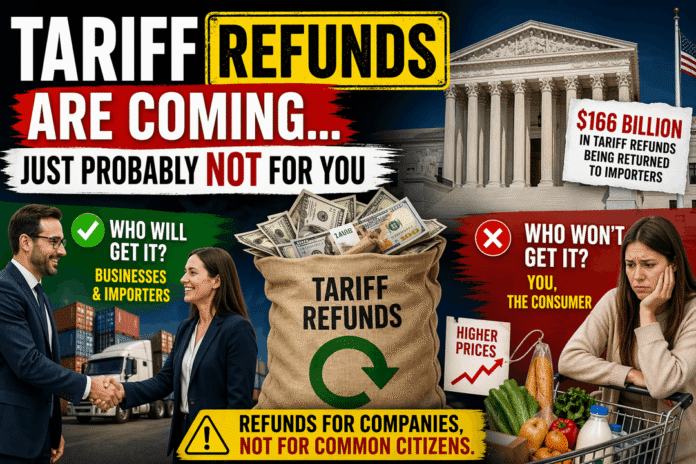
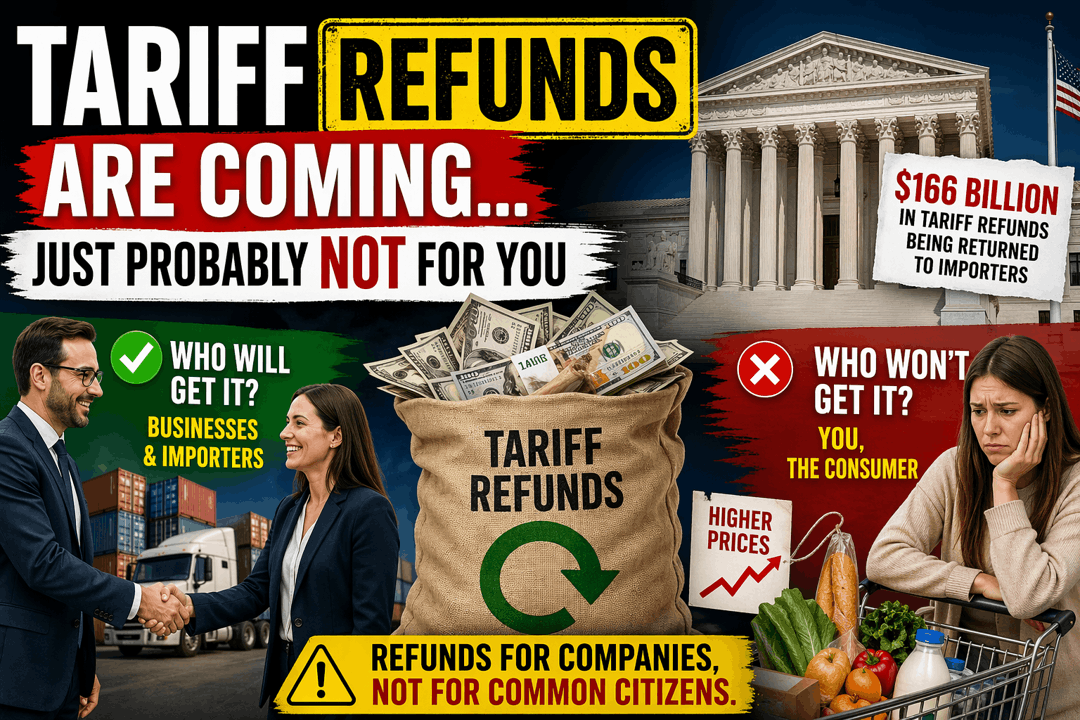
The Trump Administration’s tariff refund story sounds simple at first: billions of dollars in tariffs are being returned after the Supreme Court ruled many of them were unlawful. But the bigger question is who actually gets that money back, and the answer is more limited than many people expect. In most cases, the refund belongs to the businesses that directly paid the tariffs at customs, not to everyday shoppers who paid higher prices later.
That is why this issue matters to both companies and consumers. Importers may recover duties plus interest, while regular buyers usually do not have a direct legal claim, even if they paid indirectly through higher retail prices. In this blog, you will learn how the refund process works, why the Trump Administration tariff refunds are going mostly to companies, and what it could mean for prices, businesses, and consumers in the months ahead.
What changed
The turning point came on February 20, 2026, when the Supreme Court ruled that many tariffs imposed under the International Emergency Economic Powers Act, or IEEPA, were unconstitutional because that law does not give the president tariff power. A legal alert from White & Case says all IEEPA-based tariffs were terminated on February 24, 2026, after the ruling.
Those tariffs had brought in a huge amount of money, with reporting around April 2026 putting the total refund pool at about $166 billion. One report also said the first phase of the government’s refund system began on April 20, 2026 through the CAPE portal.
Who gets refunds
The short answer is that importers get the refunds because they were the ones who legally paid the duties at the border. That includes large retailers, manufacturers, logistics firms, and other companies that filed customs entries and paid the tariffs directly.
Here is the basic split:
- Businesses and importers can apply for repayment.
- Customs brokers may help file claims on their behalf.
- Refunds can include interest and may take 60 to 90 days after approval, according to reporting.
- The process is not automatic, so companies must submit claims.
Why consumers usually miss out
Consumers often absorb tariff costs through higher prices on imported goods, but that does not make them the legal payer of the tariff. Because of that, there is no clear rule requiring a company to pass the refund back to customers after it receives repayment from the government.
That creates a simple but frustrating reality:
In plain English, the tax may have been felt by shoppers, but the refund follows the paper trail.
How the refund system works
The government’s new process is being handled through a customs claims system, widely reported as the CAPE portal. Importers and customs brokers are expected to file detailed claims using shipment data, tariff lines, and proof of payment.
The main steps are:
- Confirm the shipment was covered by the illegal tariff.
- Gather customs entry data and proof of payment.
- File the refund claim through the government system.
- Wait for approval and processing.
- Receive the refund, possibly with interest.
White & Case notes that the Supreme Court sent the refund issue back to lower courts, so the final legal process is still developing. That means the timeline can shift if courts issue new instructions or if agencies change their procedures.
Why businesses care
For businesses, this is not a small accounting issue. The refund pool is large enough to affect cash flow, balance sheets, and pricing decisions, especially for companies that imported at scale. If a retailer paid tariffs months ago and has been carrying that cost, getting it back can improve margins and free up cash.
This is especially important for firms that already passed part of the cost into retail prices. They may receive the refund but still decide to keep prices where they are, which means the savings may not automatically reach shoppers. That is one reason this story is being described as a win for companies first and consumers second.
What happens to prices
Prices may not fall right away, even if refunds start moving through the system. PIIE says tariff costs will likely continue to show up in store prices as long as tariffs or replacement duties remain in place, because businesses often pass costs through to customers over time.
A simple example helps:
- A retailer imports shoes and pays a tariff.
- The retailer raises the shelf price to protect profit.
- Later, the tariff is refunded to the retailer.
- The store may keep the price unchanged, so the consumer sees no immediate benefit.
That is why direct refunds to shoppers are unlikely under current law, even though shoppers may have paid more at the register.
Trump Administration context
The Trump Administration is central to this story because the tariffs were imposed under its emergency trade strategy, and the refund fight is tied to those actions. The Supreme Court ruling did not end all tariffs, but it did strike down a major set of IEEPA-based duties that had defined the administration’s trade posture.
PIIE also notes that the administration later leaned on other trade authorities, showing that the tariff debate did not stop with one court ruling. So while the refund process is moving ahead, the broader trade policy battle is still active.
Comparison of outcomes
Here is the practical difference between what businesses and consumers can expect:
FAQ
What are Trump Administration tariff refunds?
They are repayments for tariffs that the Supreme Court found were illegally imposed under IEEPA, and the money is being returned through a customs claims process.
Why do companies get the money instead of consumers?
Because companies imported the goods and legally paid the tariff at customs, while consumers paid only indirectly through higher prices.
Is the refund automatic?
No. Importers must file claims and provide shipment and payment records.
How long will refunds take?
Reporting says approved claims may be processed in about 60 to 90 days, though some cases may take longer because of legal and technical issues.
Will consumers ever get money back?
Not under the current legal setup. Consumers do not have a direct refund claim, although companies could voluntarily lower prices or share the benefit.
Are all Trump Administration tariffs affected?
No. White & Case says tariffs imposed under other authorities, such as Section 232 and Section 301, are not affected by this ruling.
Conclusion
The Trump Administration tariff refund story is big, but the benefit is narrow. The money is going back mostly to the companies that paid the tariffs directly, not to ordinary shoppers who felt the cost indirectly. That is why the headline sounds like relief, yet the real winners are mainly importers, retailers, and other businesses that filed the duties in the first place.
For consumers, the lesson is simple: lower tariffs do not always mean instant lower prices, and refund checks do not automatically reach the checkout line. The Trump Administration’s tariff fight has moved from the courtroom to the claims process, but the everyday payoff is still uncertain. Share your view in the comments, and subscribe or share this post if you want more clear updates on trade, prices, and policy.

