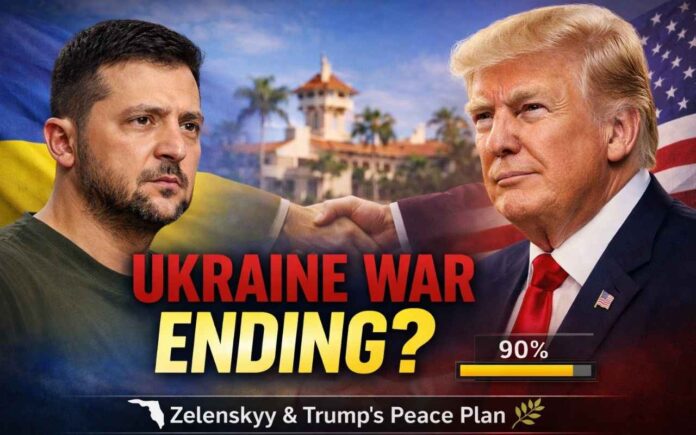
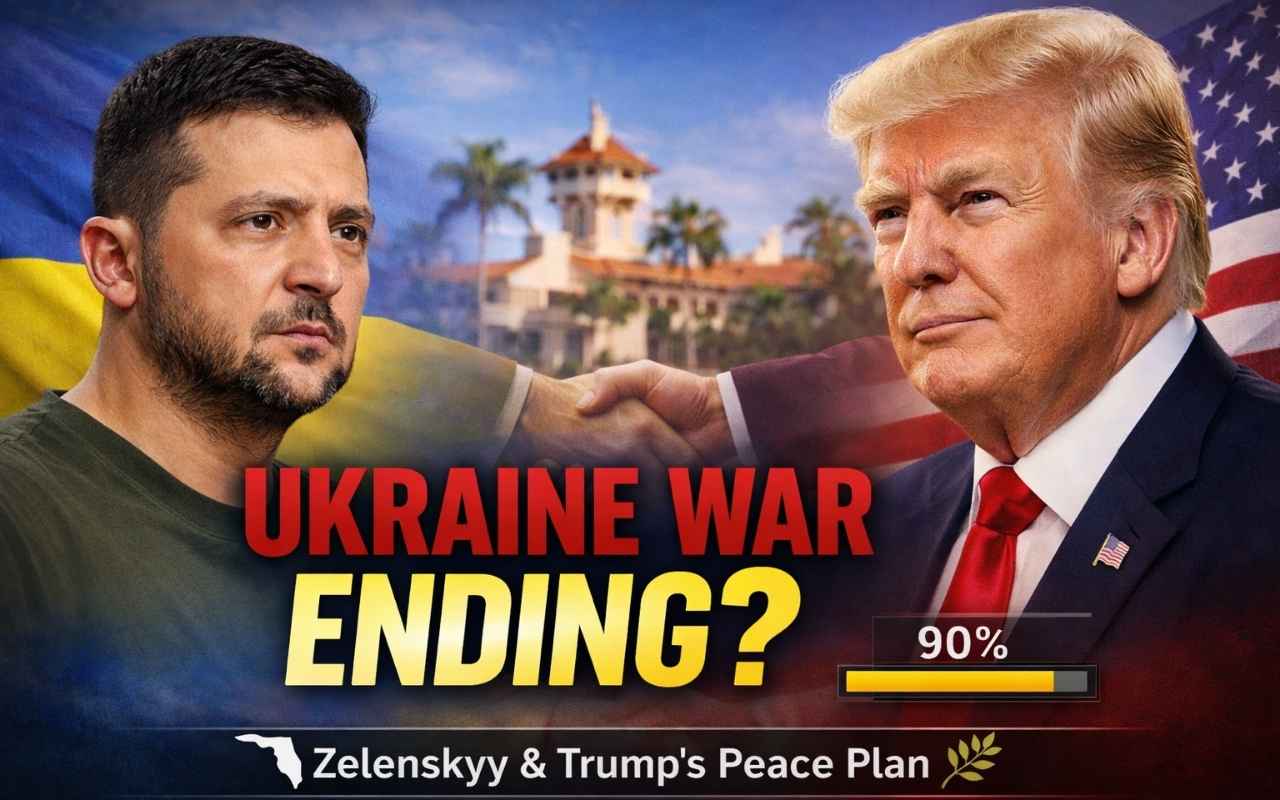
As Trump and Zelenskyy eye a “90% complete” peace plan in Florida, the world watches for a breakthrough in the nearly four-year Ukraine-Russia war and its global ramifications.
Table of Contents
The geopolitical landscape stands on the precipice of a potentially monumental shift, as reports indicate a forthcoming meeting in Florida between Ukrainian President Volodymyr Zelenskyy and US President Donald Trump. At the heart of this highly anticipated discussion is a peace plan, which Zelenskyy himself has declared to be “90 percent complete,” aiming to bring an end to the protracted, nearly four-year conflict between Ukraine and Russia. The proposals reportedly include the establishment of a demilitarized zone in eastern Ukraine, a critical step that could redefine regional security and global stability. This development, if realized, could represent a significant diplomatic breakthrough, with profound implications for all major international actors, including India.
The Genesis of a “90% Complete” Plan
The notion of a peace plan being “90 percent complete” suggests extensive groundwork and negotiations have already transpired, likely through backchannels or preliminary diplomatic efforts involving various stakeholders. The specifics remain largely under wraps, but Zelenskyy’s statement points to a substantive framework ready for high-level endorsement. A demilitarized zone, a key proposed element, is not a new concept in conflict resolution. Historically, such zones have been implemented to separate warring parties, prevent direct engagement, and build confidence for broader political solutions. Its inclusion signals an intent to address immediate military tensions and create a buffer against future aggression in a highly contested region of eastern Ukraine.
For Ukraine, the impetus to pursue such a plan is clear: to halt the devastating human and economic cost of the war, reclaim sovereignty, and secure its long-term future. The ongoing conflict has exacted an immense toll on Ukrainian infrastructure, economy, and population, making any credible path to peace a top priority. Zelenskyy’s willingness to engage directly with President Trump on this matter underscores the perceived pivotal role of the United States in brokering a viable resolution.
Donald Trump’s Return to the Diplomatic Stage: A “Dealmaker’s” Approach
Donald Trump’s potential involvement in such a high-stakes peace negotiation aligns with his self-professed identity as a “dealmaker.” Throughout his career, and particularly during his previous presidency, Trump emphasized a transactional approach to foreign policy, often prioritizing direct negotiations and swift resolutions over multilateral frameworks. His long-standing assertion that he could end the conflict “in 24 hours” highlights his confidence in his diplomatic prowess.
Should Trump assume a central role in brokering this peace, his strategy would likely focus on several key pillars:
- Direct Engagement: A preference for one-on-one negotiations with key leaders, bypassing traditional diplomatic channels where possible.
- Leveraging US Influence: Utilizing America’s economic and military might to incentivize compliance from all parties.
- Transactional Outcomes: Seeking tangible, measurable results, potentially at the expense of intricate, long-term geopolitical strategies.
- “America First” Principles: Ensuring any agreement serves perceived US national interests, which might include reducing financial commitments to allies or re-evaluating security postures.
This approach could either expedite a resolution by cutting through red tape or create new points of contention if traditional alliances and international norms are overlooked. The exact nature of Trump’s proposals, beyond facilitating the existing “90% complete” plan, would be critical to understand the long-term viability and global acceptance of any agreement.
Key Elements and Potential Roadblocks of the Peace Plan
While details remain scarce, a comprehensive peace plan for Ukraine would likely need to address several core issues beyond just a demilitarized zone:
- Territorial Integrity: The most contentious issue remains the status of Ukrainian territories currently occupied by Russia, including Crimea and parts of eastern and southern Ukraine. Any credible peace deal would need to define the future of these regions, a point on which both sides hold deeply entrenched positions.
- Security Guarantees: Ukraine would undoubtedly seek robust, internationally backed security guarantees to prevent future aggression. The nature of these guarantees – whether through NATO membership, bilateral treaties, or a new collective security framework – would be paramount.
- Sanctions Relief: Russia would likely demand the lifting of international sanctions imposed since 2014 and intensified after the 2022 invasion. The sequencing and conditions for sanctions relief would be a major bargaining chip.
- Reconstruction and Reparations: Ukraine faces a monumental task of reconstruction. The peace plan might include provisions for international aid and potentially reparations from Russia for war damages.
- Humanitarian Issues: Prisoner exchanges, the return of displaced persons, and accountability for war crimes would also be critical components.
The “90 percent complete” status suggests that some consensus or at least a framework for discussion exists on these thorny issues. However, the final 10 percent often involves the most difficult concessions, particularly regarding territorial integrity and sovereignty.
The primary roadblock remains Russia’s willingness to engage meaningfully and accept terms that do not compromise its perceived security interests or territorial gains. Historically, Russia has been resistant to external mediation that it views as biased. Its reaction to a US-Ukraine brokered plan, especially one that might demand significant concessions, will be the ultimate determinant of success.
Global Repercussions and the International Community’s Stance
A successful peace agreement in Ukraine would send ripples across the globe, fundamentally altering geopolitical alignments and economic dynamics.
- European Security Architecture: A resolution would necessitate a re-evaluation of Europe’s security architecture. While easing immediate tensions, the long-term relationship between Europe, Russia, and the US would need recalibration. NATO’s role and expansion would also be under scrutiny.
- Energy Markets: A stable peace could lead to increased stability in global energy markets, potentially easing prices and reducing reliance on volatile regions. Russia’s role as an energy supplier, particularly to Europe, would need to be redefined.
- International Law and Norms: The manner of resolution would set a precedent for future conflicts and the enforcement of international law regarding territorial sovereignty and the non-use of force.
- US-China Relations: A resolution could free up US diplomatic and military resources, potentially allowing a greater focus on the Indo-Pacific and competition with China. Conversely, a failure to secure peace could be seen as a sign of US diplomatic weakness.
The international community, including the European Union, NATO, and the United Nations, would closely scrutinize any proposed agreement. Their endorsement and participation in verification and enforcement mechanisms would be crucial for its legitimacy and sustainability. Skepticism might arise if the deal is perceived to be imposed rather than mutually agreed upon, or if it undermines foundational principles of international law.
India’s Strategic Calculus: Navigating a New World Order
For India, a country that has maintained a delicate diplomatic balance throughout the conflict, the prospect of peace in Ukraine presents both opportunities and challenges. India has historically called for a diplomatic resolution while safeguarding its strategic autonomy and diverse foreign policy interests.
Opportunities for India:
- Economic Stability: A cessation of hostilities would contribute to greater stability in global energy and commodity markets, directly benefiting India’s import-dependent economy. Reduced inflationary pressures and more predictable supply chains would be welcome.
- Strategic Manoeuvring: With reduced immediate focus on the Ukraine conflict, India might find more room for strategic manoeuvring in its relationships with both the US and Russia, potentially allowing it to deepen economic and strategic partnerships without the intense pressure of the ongoing war.
- Multilateral Engagement: India, as an emerging global power and a strong advocate for a multipolar world order, could play a constructive role in post-conflict reconstruction efforts or peace-building initiatives, further enhancing its international standing.
Challenges for India:
- US-Russia Re-alignment: Depending on the terms of the peace deal, the dynamics between the US and Russia could shift dramatically. If the US and Russia find common ground on certain security issues, it might impact India’s long-standing strategic partnership with Russia, particularly in defense and energy.
- Non-Proliferation and International Norms: The precedent set by the peace deal on territorial integrity and the handling of aggression could have implications for other regional disputes, potentially influencing India’s own geopolitical calculations.
- Defense Sector Implications: India’s reliance on Russian military hardware has been a consistent point of discussion. A shift in Russia’s global position or a change in its defense industry’s capacity could impact India’s long-term defense procurement strategies.
India’s response to such a peace plan would likely be pragmatic, prioritizing its national interests while continuing to advocate for a rules-based international order. Its unique position as a significant partner to both Western nations and Russia places it in a critical vantage point to observe and adapt to the evolving geopolitical landscape.
The Road Ahead: Hope, Skepticism, and the Search for Lasting Peace
The prospect of a “90 percent complete” peace plan being discussed between President Trump and President Zelenskyy offers a glimmer of hope for an end to a conflict that has caused immense suffering and global instability. While the optimism is tempered by the historical complexities of the region and the deep-seated mistrust between the warring parties, the sheer commitment to developing such a comprehensive plan is noteworthy. The success of this diplomatic endeavor will hinge on the willingness of all parties, including Russia, to make difficult compromises and embrace a vision for a secure and stable future.
The world watches with bated breath as Florida potentially becomes the stage for a new chapter in the Ukraine conflict – one that could redefine international relations for decades to come. Whether this meeting yields a truly transformative peace or merely paves the way for further negotiations, its implications will resonate far beyond the borders of Ukraine, shaping the global order and forcing nations like India to recalibrate their strategic priorities in an increasingly complex world.

