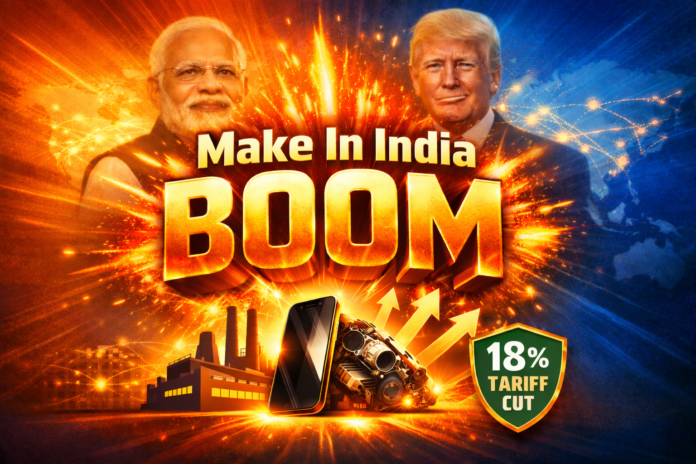
Discover the impact of the 2026 US-India trade deal. Learn how the new interim framework slashes tariffs to 18%, boosts “Make in India,” and reshapes global supply chains.
Table of Contents
The global economic landscape just shifted. On February 6, 2026, the United States and India officially announced an interim trade framework that marks the most significant reset in bilateral relations in decades. After a year of “tariff wars” and trade uncertainty, this agreement is more than just a piece of paper—it is a strategic roadmap for the future of the US-India trade deal..
For businesses, from the textile hubs of Tirupur to the tech giants in Silicon Valley, the message is clear: the era of unpredictability is over. This framework paves the way for a comprehensive Bilateral Trade Agreement (BTA) by slashing effective tariffs, securing energy supplies, and aligning two of the world’s largest democracies against global supply chain vulnerabilities.
In this blog, we’ll dive deep into what this means for “Make in India,” how it affects your favorite tech products, and why this US-India trade deal is being called a “historic milestone” by leaders in both Washington and New Delhi.
The Big Reset: Why Now?
To understand where we are going, we have to look at where we were. Throughout 2025, trade relations faced heavy turbulence. Punitive tariffs, some reaching as high as 50%, were imposed on Indian goods, largely linked to geopolitical friction over oil imports.
However, the 2026 framework signals a “diplomatic truce.” The centerpiece of this deal is the reduction of the reciprocal tariff on Indian exports to the U.S. to 18%. This is a massive win compared to the 25–50% rates seen previously. By stabilizing these ties, both nations are looking to create a “China-plus-one” alternative that is resilient, trusted, and efficient.
Key Highlights of the US-India Trade Deal
The interim framework is a classic “give-and-take” designed to fuel growth in both nations. Here is a breakdown of the core pillars of the agreement:
1. Massive Tariff Reductions
The U.S. has agreed to bring down the effective tariff on a vast array of Indian products to 18%. Crucially, the additional 25% penalty previously tied to Russian oil imports has been scrapped.
Zero-Tariff Items for India:
- Gems and Diamonds: A boost for clusters in Maharashtra and West Bengal.
- Generic Pharmaceuticals: Ensuring India remains the “pharmacy of the world.”
- Smartphone Ecosystem: Maintaining India’s edge in mobile manufacturing.
2. The $500 Billion Commitment
India has pledged to purchase approximately $500 billion worth of American goods over the next five years. This includes:
- Energy Products: Crude oil, LNG, and coking coal.
- Technology: High-end GPUs, AI chips, and data center equipment.
- Civil Aviation: Aircraft and aircraft parts to support India’s booming travel sector.
3. Market Access for Agriculture
While protecting sensitive sectors like dairy and staple grains (rice, wheat, maize), India has opened doors for specific U.S. products:
- Tree nuts (Almonds, Walnuts)
- Fresh and processed fruits (Apples, Berries)
- Soybean oil (under a quota-based system)
- Wine and spirits
Comparison: Old vs. New Trade Terms
| Feature | 2025 Status (Pre-Agreement) | 2026 Interim Framework |
| Average Tariff on Indian Goods | Up to 50% (with penalties) | 18% (Fixed Reciprocal Rate) |
| Russian Oil Linkage | 25% Punitive Penalty Applied | Penalty Removed |
| Tech Import Barriers | Restrictive Licensing | Simplified ICT Procedures |
| Agricultural Access | High Import Duties | Preferential Quotas (Selected) |
| Strategic Focus | Conflict & Retaliation | Supply Chain Resilience |
How This Impacts “Make in India”
The US-India trade deal is a shot in the arm for the “Make in India” initiative. By securing an 18% tariff rate, Indian manufacturers now have a competitive edge over regional rivals.
- Manufacturing Surge: Lower tariffs make Indian-made textiles, leather goods, and machinery more attractive to American buyers than products from Vietnam (20%) or China (30%+).
- Tech Collaboration: The deal facilitates the import of high-quality ICT goods and AI hardware. This allows Indian MSMEs to upgrade their tech stack without the burden of high import duties.
- Job Creation: Minister Piyush Goyal noted that the deal could open a $30 trillion market for Indian exporters, potentially creating lakhs of jobs for youth and women in the MSME sector.
Strategic Supply Chains and Technology
In the modern world, trade isn’t just about selling goods; it’s about who controls the technology. This US-India trade deal places a heavy emphasis on iCET (Initiative on Critical and Emerging Technology).
The Shift in Energy
India is pivoting its energy procurement toward the U.S. and potentially South America. By reducing reliance on Russian crude, India aligns itself more closely with U.S. strategic interests while securing a steady flow of LNG and coking coal for its steel and power industries.
The Data Center Revolution
Under the framework, U.S. tech giants (like Microsoft and Google) will find it easier to set up data centers in India. This is complemented by tax holidays mentioned in the Union Budget 2026-27, making India a global hub for data processing and AI training.
FAQ: Everything You Need to Know About the US-India Trade Deal
Q1: Will the US-India trade deal make iPhones cheaper?
While the deal maintains zero duty on smartphone exports from India, the simplified licensing for ICT components could lead to more efficient local assembly, potentially stabilizing prices for high-end electronics.
Q2: Are Indian farmers protected under this agreement?
Yes. The Indian government has explicitly excluded sensitive “staple” sectors like dairy, wheat, rice, and soy from the primary tariff cuts to ensure rural livelihoods are not disrupted by subsidized imports.
Q3: Why is 18% such a significant number?
The 18% reciprocal tariff is a “sweet spot” that removes the punitive 50% peaks seen in 2025. It makes India more competitive than most of its Southeast Asian neighbors in the American market.
Q4: How does this deal affect the “China-plus-one” strategy?
It solidifies it. By creating a stable, lower-tariff environment, American companies are now more likely to shift their manufacturing bases from China to India, knowing the trade rules won’t change overnight.
Q5: What is the $500 billion purchase plan?
India intends to buy $500 billion worth of U.S. goods (energy, aircraft, tech) over the next five years. This helps balance the trade deficit and ensures the U.S. remains India’s top trading partner.
Image Suggestions for Your Blog
- The Handshake: A high-quality photo of PM Modi and the U.S. President from their recent meeting to symbolize the “New Chapter.”
- Infographic – The 18% Advantage: A bar chart comparing India’s 18% tariff vs. Vietnam (20%) and China (35%) to show competitiveness.
- The Supply Chain Map: A visual showing the flow of U.S. energy/tech to India and Indian pharma/textiles to the U.S.
- Make in India Logo: Overlaid on a background of a modern automated factory to represent manufacturing growth.
Conclusion: A Win-Win for the Future
The US-India trade deal of 2026 is a pragmatic masterstroke. It trades energy concessions for manufacturing survival and technological leapfrogging. By moving from “intent” to “implementation,” both nations have shown they are ready to lead the global economy into a more resilient era.
For India, it’s a chance to scale “Make in India” to a global level. For the U.S., it’s a way to secure a massive market for its innovation and energy. As this interim framework evolves into a full-scale Bilateral Trade Agreement, the partnership between these two giants is set to become the most defining economic relationship of the 21st century.

